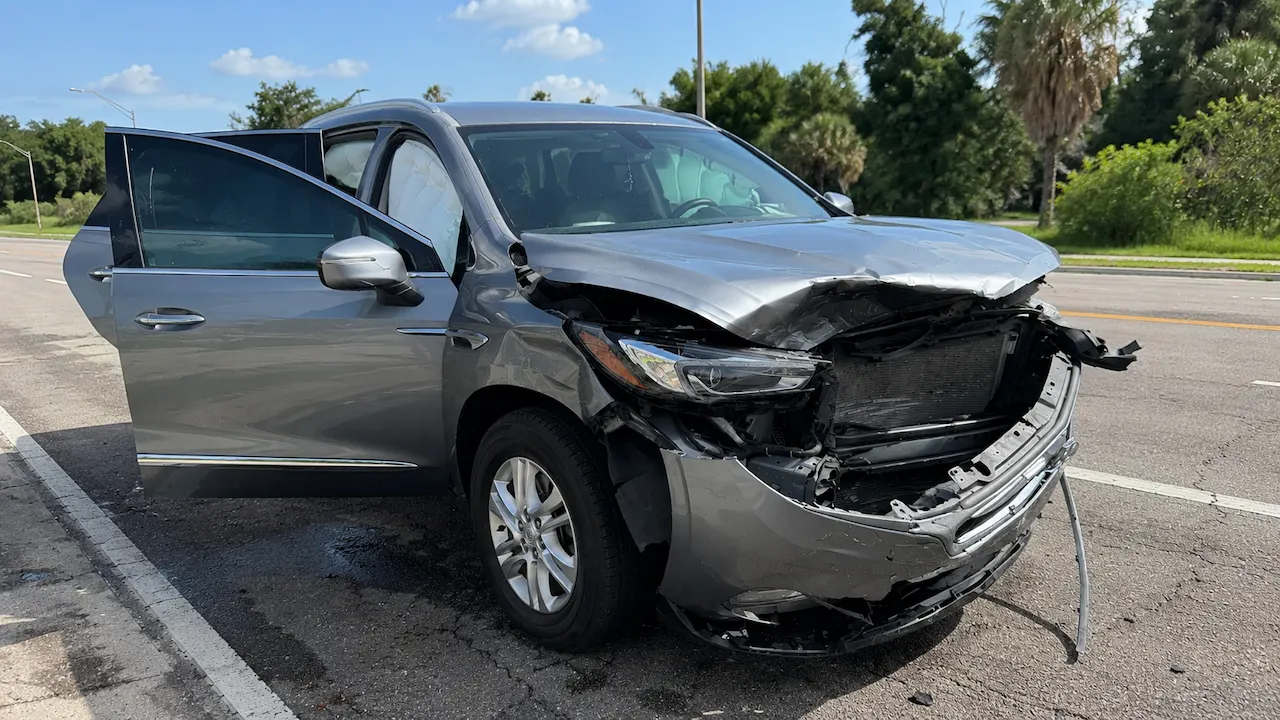
A Sarasota rideshare accident involving Kelly Bensimon and Chef Andrew Molen — set against 33% rideshare crash rates, NHTSA left-turn data, and MDL 3084 — makes the case for professional chauffeur service.
SARASOTA, FLORIDA — Monday, July 14, 2026 — When we read about car accidents, we often look at them as unfortunate statistics. But when a violent collision impacts individuals who have built their entire careers on uncompromising quality, it forces us to look at the tragic irony of the choices we make when it comes to our personal safety.
A stark reminder of this unfolded in Sarasota, Florida.
The Sarasota Rideshare Accident
Reality TV personality Kelly Bensimon ( The Real Housewives of New York City ) and acclaimed celebrity chef Andrew Molen were traveling as passengers in a standard Uber rideshare. According to reports, the vehicle was attempting a left turn onto the busy Tamiami Trail when it collided head-on with an oncoming car.
The impact was devastating. Airbags deployed, Bensimon was knocked unconscious, and Molen — who had tried to warn the driver by yelling "brake, brake!" just seconds before the crash — suffered painful neck injuries. Both, along with the other driver, were rushed to the hospital in ambulances.
Our deepest sympathies and wishes for a swift recovery go out to everyone involved. As they heal, this incident highlights a powerful lesson about the real-world consequences of choosing quick, on-demand convenience over safety — a lesson we have already covered in The Expensive Reality of Cheap Choices .
The Expensive Reality of Cheap Choices
The Culinary Irony: Compromising on the Most Important Ingredient
At the time of the crash, Bensimon and Molen were in Florida filming their digital lifestyle series, The Chef and the Housewife — a show dedicated to bringing ultra-high-net-worth living to life through exceptional culinary experiences. They had just finished hosting a spectacular event at a $22 million real estate listing.
As an elite chef, Andrew Molen understands a fundamental rule of his craft: you cannot serve a premium luxury dish if you use cheap, unchecked ingredients. True culinary experts would never charge top-dollar for an exquisite meal, only to cut corners on the quality of what goes onto the plate. Quality is an all-or-nothing standard.
Yet, when we step out of the kitchen, many of us fall into a strange double standard. We demand the absolute best in our food, our homes, and our careers, but we then trust our lives to the "fast food" of the transportation industry: budget, app-based rideshares.
When a high-profile figure chooses a standard on-demand gig-car, they step away from their own brand standards. That cheap ride suddenly turns into an incredibly expensive mistake. For Chef Molen, the crash forced him to immediately cancel five major culinary events while dealing with severe neck pain. When you compromise on the standard of your transportation, you compromise your health, your schedule, and your career.
The Online Backlash: "He's Not a Chef, He's a Cook"
In the wake of the news breaking, several online commentators quickly pointed out a distinct culinary irony. When articles labeled Molen a "celebrity chef," critics in the comment sections fired back: "He is not a chef. He's a cook."
In the culinary world, that distinction is massive.
A cook is a line worker. They follow basic instructions, use whatever ingredients are handed to them, and prioritize quick, high-volume output.
A chef is an executive leader. They are masters of their craft who understand that the final plate is only as good as the absolute finest ingredients sourced. They never cut corners, because they know a single sub-par element ruins the entire experience — and their reputation.
The online critics inadvertently stumbled onto a profound truth. If you claim to be a five-star culinary master who commands luxury rates, but you trust your safety to a budget, app-based gig service, what message are you sending to your clientele?
By choosing the "fast-food" option of transportation, you are signaling that you are willing to compromise on the most critical ingredient of all: your own life. In a sense, riding in a budget rideshare strips away the "chef" title and reduces you to a "cook" who prefers cheap convenience over elite execution.
The Transport Parallel: Chauffeurs vs. App Drivers
This culinary divide mirrors the transportation industry perfectly — and it is exactly why we argue that all chauffeurs are drivers, but not all drivers are chauffeurs .
all chauffeurs are drivers, but not all drivers are chauffeurs
A standard rideshare driver is the "line cook" of the road. They are everyday gig workers looking to make extra income in their spare time, driving personal vehicles with zero professional training. They rely heavily on phone screens for navigation and are often driving exhausted.
Conversely, a professional chauffeur is an executive chef. They are highly vetted, commercially licensed specialists whose entire profession is dedicated to defensive driving, passenger safety, and seamless execution.
When you choose a budget app, you are letting an amateur "cook" handle your safety. And as this Sarasota crash proved, when a driver lacks professional training, a split-second navigation mistake during a high-risk maneuver — like a left-hand turn — can result in a catastrophic, life-altering impact.
The Systemic Risk: Rideshare Accident Statistics
It is easy to assume that rideshare apps are "safe enough," but independent data shows these platforms are built on volume and speed, not rigorous professional standards.
The 33% collision reality. A landmark study by the University of Illinois found that one-third (33%) of all rideshare drivers have been involved in an accident while on the job. [U. of Illinois]
The rise in fatalities. Research from the University of Chicago Booth School of Business links the arrival of ridesharing in U.S. cities to a 3% annual increase in overall traffic fatalities — roughly 987 additional deaths per year nationwide. [Barrios, Hochberg & Yi, Chicago Booth]
The left-turn danger zone. In both the Sarasota crash and the fatal Maryland rideshare crash in Upper Marlboro , the collisions occurred at intersections where the driver was navigating a turn. The National Highway Traffic Safety Administration (NHTSA) reports that over 36% of all intersection crashes involve a left turn — one of the most cognitively demanding maneuvers on the road. When an untrained driver is distracted by a dashboard-mounted phone screen, a split-second navigation error can become fatal. [NHTSA Crash Causation Survey] A similar left-turn pattern appeared in the 2016 rideshar
fatal Maryland rideshare crash in Upper Marlboro
Chauffeur Safety vs. Rideshare Gig-Economy
Recent headlines make the contrast painfully clear — from a Lyft "designated driver" who allegedly offered a passenger a shot mid-ride to a Boston Uber driver arrested after a Logan Airport stabbing .
Lyft "designated driver" who allegedly offered a passenger a shot mid-ride
MDL 3084: The Corporate Legal Landscape
The Sarasota crash reflects the core argument now playing out in federal court. Thousands of claims have been consolidated under In re: Uber Technologies, Inc., Passenger Sexual Assault and Safety Litigation , MDL No. 3084 (N.D. Cal.) . The unifying theory across those cases is that the rideshare business model inherently prioritizes rapid scaling and cheap labor over passenger safety, background screening, and professional driver standards. We break the full docket down in Is Uber Safe? What MDL 3084 Means for Travelers .
Is Uber Safe? What MDL 3084 Means for Travelers
In other words: the Bensimon–Molen crash is not an outlier. It is the predictable output of a system designed for volume, not vetting.
What a Settlement Can Never Buy Back
In the wake of a rideshare accident, corporations carry large insurance policies to cover medical bills, and victims can often recover financial damages. But as this accident proves, no financial compensation undoes the damage once it occurs:
No check can instantly heal a body or remove physical pain.
No settlement can give you back lost time, cancelled events, or peace of mind.
No lawyer can reverse the trauma of a head-on collision.
The only true way to protect yourself is to make the safer choice before you open the door and step into a vehicle — a principle we cover in The 5-Star Illusion: How to Spot a Bad Car Service in 60 Seconds .
The 5-Star Illusion: How to Spot a Bad Car Service in 60 Seconds
Keep Your Standards in Every Lane of Life
Hiring a professional black car or luxury chauffeur service is not about showing off. It is an act of self-care and brand protection.
A professional chauffeur service means a vetted, commercially licensed professional whose only job is to get you to your destination safely — in a pristine, regularly inspected luxury vehicle rather than a stranger's personal car. When your day matters, request a chauffeured quote instead of opening an app. For more coverage of rideshare safety, the MDL 3084 docket, and executive travel, visit the TUXEDO Journal .
luxury vehicle
We wish Kelly, Andrew, and the other driver a full and complete recovery. Let their experience serve as a respectful reminder: never compromise your standards when your safety is on the line.
Frequently Asked Questions
Is Uber safe compared to a professional chauffeur service?
Uber and other rideshare apps rely on gig-economy drivers using personal vehicles, with limited vetting beyond a basic background check. A professional chauffeur service uses commercially licensed drivers, inspected luxury vehicles, and premier commercial insurance. Independent studies — including a University of Illinois finding that 33% of rideshare drivers have been in an on-the-job accident — consistently show the two models operate at very different safety standards.
What percentage of rideshare drivers have been in an accident?
A University of Illinois study of gig-worker driving behavior found that roughly 33% — one in three — rideshare drivers have been involved in an accident while on the job. Separately, University of Chicago Booth researchers linked the arrival of ridesharing in U.S. cities to a 3% annual increase in overall traffic fatalities, representing an estimated 987 additional deaths per year nationwide.
Why are left turns so dangerous in rideshare accidents?
The National Highway Traffic Safety Administration reports that over 36% of all intersection crashes involve a left turn. Left turns require judging oncoming speed, gap, pedestrians, and signal timing at once — one of the most cognitively demanding driving maneuvers. When a rideshare driver is also glancing at a dashboard-mounted phone for turn-by-turn navigation, the risk of a fatal misjudgment rises sharply, as seen in both the Sarasota crash and the 2016 rollover involving actor Miles Teller.
What is MDL 3084 and how does it relate to rideshare safety?
MDL 3084 refers to In re: Uber Technologies, Inc., Passenger Sexual Assault and Safety Litigation , a federal multidistrict litigation pending in the Northern District of California that consolidates thousands of passenger-safety claims against Uber. The unifying argument across those cases is that Uber's business model prioritizes rapid scaling and low-cost labor over background screening, driver training, and passenger safety — the same systemic gap that traffic-safety research keeps surfacing on the road.
How is a professional black car service different from Uber Black?
Uber Black is a premium tier inside the same gig-economy platform: the vehicle looks nicer, but the driver is still an app-dispatched contractor using a personal car and juggling incoming ride requests. A professional black car service arranges a commercially licensed chauffeur in a maintained luxury vehicle, with pre-planned routing, dispatch support, flight tracking, and commercial insurance — a fundamentally different operating standard.
Verified References & Sources
Victim statements & recovery — Page Six: "Kelly Bensimon 'lucky to be alive' after Florida car crash" (July 15, 2026).
Wire reprint — ArcaMax Entertainment (July 15, 2026).
Broadcast coverage — Fox News Entertainment (July 15, 2026).
Rideshare crash rates (33%) — University of Illinois study on gig-worker driving behaviors .
U.S. traffic fatality rise (3%) — Barrios, Hochberg & Yi, "The Cost of Convenience: Ridesharing and Traffic Fatalities" (Chicago Booth) .
NHTSA left-turn statistics — National Highway Traffic Safety Administration Crash Causation Survey .
Federal rideshare litigation — In re: Uber Technologies, Inc., Passenger Sexual Assault and Safety Litigation , MDL No. 3084 (N.D. Cal.) .
Historical rideshare incident — TMZ: "Miles Teller's Truck Flips Over in LA-Area Car Accident" (December 2016).
BEST AIRPORT FOR DRURY PLAZA: MCO, SANFORD OR TAMPA?
DRURY PLAZA SHUTTLE: UNIVERSAL AND THE CONVENTION CENTER
DRURY PLAZA BEFORE A PORT CANAVERAL CRUISE: THE PLAN
IS DISNEY WORLD SAFE? WHAT THE POLK ARRESTS MEAN FOR FAMILIES
VIEW THE FULL JOURNAL →
TRAVEL TIPS OCTOBER 31, 2026 UPDATED NOV 7, 2026 6 MIN A FREE PRIVATE CAR SERVICE QUOTE ISN'T FREE TO MAKE. HERE'S WHAT'S INSIDE.
AIRPORTS OCTOBER 31, 2026 UPDATED NOV 7, 2026 7 MIN DISNEY AIRPORT LUGGAGE TRANSFER: WORTH IT OR RISKY?
BROWSE LOCATIONS
NEWS
WEDDINGS
THE NOTEBOOK
AIRPORT GUIDES
CRUISES & PORTS
ORLANDO
FLEET
CORPORATE
Contact
Home
Privacy Policy
Terms of Service
Download our app — log in with your booking email.