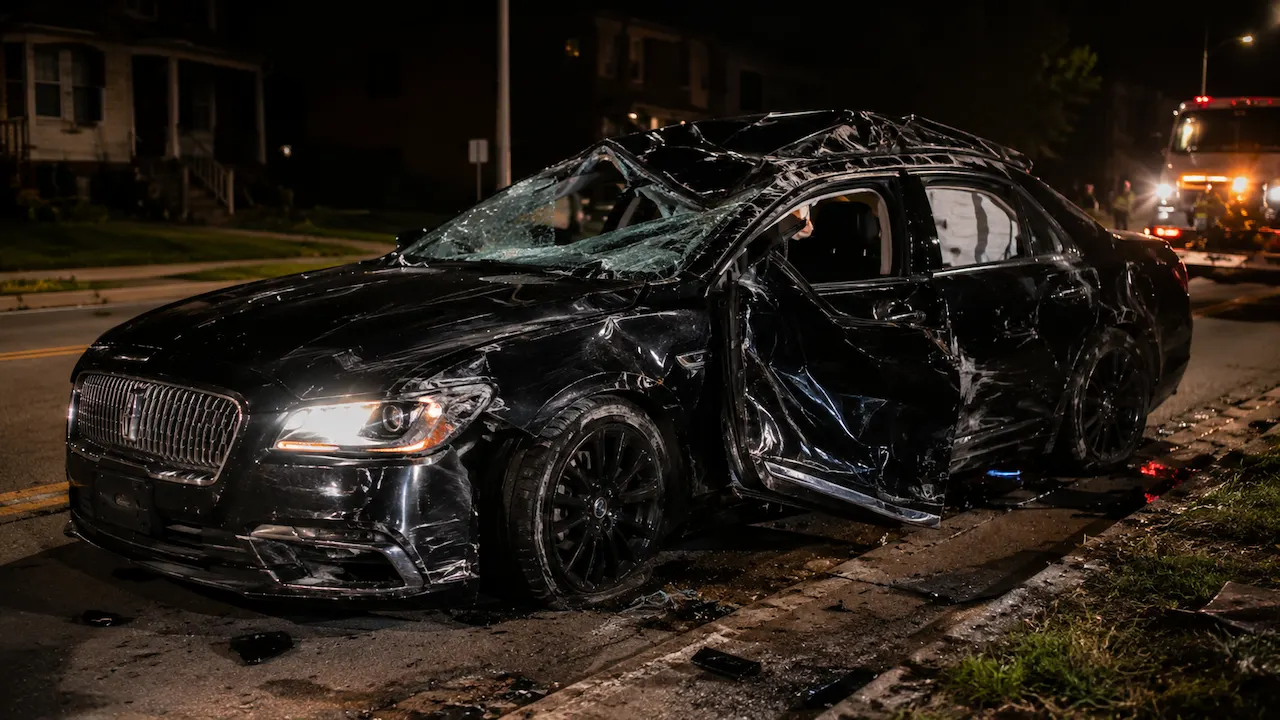
Two Detroit passengers did what Lyft's own ads tell everyone to do — and their designated driver allegedly offered them a shot, then flipped the car twice on Linwood. What the "safe ride home" pitch actually guarantees, and what it doesn't.
We have all seen the commercials. For years, Lyft has spent millions of dollars branding itself as the ultimate hero of your weekend plans. Their message is simple and noble: "Hey you! Yes, you, the person who has had three margaritas. Do not touch those car keys. Open our app, pay a few bucks, and a responsible, sober adult will magically appear to drive you home safely."
It is a great sales pitch, and it is also the reason many riders never consider a professional chauffeur service as the alternative. In fact, Lyft's own corporate data proudly boasts that 60% of their riders use the app specifically because it makes them less likely to drive under the influence. They even partner with groups like Mothers Against Drunk Driving (MADD) and Budweiser to hand out free ride codes — the same playbook now under scrutiny in the 2026 Uber lawsuit (MDL 3084) . They want you to think of their app as a giant, smartphone-based safety shield.
professional chauffeur service
But a wild, terrifying accident in Detroit recently exposed a major flaw in this logic. The apps are great at keeping you from driving drunk. But they have absolutely no way of making sure your driver is sober.
Doing Everything Right, Flying Upside Down
Late on Sunday night, June 28, 2026, two 20-year-old women named Dariana and Latasha were out in Detroit. They had been drinking, and like responsible adults, they decided they were in no condition to drive. They did exactly what Lyft always tells people to do: they ordered a ride to get home safely — the kind of decision that, on paper, should have made it easy to spot a bad car service in 60 seconds and avoid it.
spot a bad car service in 60 seconds
A black Lincoln sedan pulled up, and they hopped in the back. They thought the danger was over. They were wrong.
According to the passengers, the driver took one look at the alcohol they were carrying and decided it was time to party. Instead of putting the car in drive and keeping his eyes on the road, he allegedly reached into his side door pocket, pulled out his own personal bottle of liquor, and gave them an unexpected hospitality check:
"Do you want a shot?"
Before the girls could fully process the fact that their designated driver was trying to host a happy hour from the front seat, he casually admitted he had been "sipping" throughout his shift.
Minutes later on Linwood Street, the ride came to a sudden, violent end. The driver slammed into a parked SUV at high speed. The impact was so hard that the Lyft vehicle flipped completely upside down, rolling over twice before smashing to a halt.
The Search for the Lost Bottle
Miraculously, both young women survived the rollover, though they were banged up, bleeding, and terrified. Latasha managed to crawl out of the upside-down wreckage and call 911 — echoes of the Logan Airport Uber stabbing , another case where a passenger's only real safety net was their own phone.
Logan Airport Uber stabbing
As neighbors rushed out of their houses to see what the loud explosion was, they pulled out their phones and started filming. And this is where the story goes from scary to completely ridiculous.
Instead of checking to see if his passengers were alive, the driver was caught on video frantically digging through the smashed, overturned car. Was he looking for a first-aid kit? Was he looking for his insurance information? No. According to the witnesses and passengers, he was desperately crawling around trying to find his lost bottle of liquor.
The Detroit Police arrived shortly after and took the driver straight into custody.
The Big Tech Blindspot
When you open a ride-share app, the screen lights up with all kinds of high-tech safety promises. Lyft loves to brag about its cutting-edge features:
Real-Time Ride Monitoring: If the car stops for too long, the app checks on you.
Predictive Road Safety: The app tracks if a driver slams on the brakes too hard.
Emergency Buttons: A quick link to live security guards at ADT.
All of those features sound incredibly advanced. But this Detroit crash — and the case of a rideshare driver found at fault in a fatal Maryland crash — highlights a glaring, simple truth: the app cannot smell alcohol.
rideshare driver found at fault in a fatal Maryland crash
Lyft has tons of data tracking where the car goes, but it has zero ways to check the sobriety of the person driving it. There is no remote breathalyzer attached to the driver's phone. A driver doesn't have to pass a sobriety test before logging on to accept passengers.
Essentially, Lyft operates on a giant honor system. They run a background check when a driver applies, and after that, they just assume the driver is safe until something terrible happens, or until a passenger survives a nightmare ride long enough to leave a bad review. It is a useful reminder that all chauffeurs are drivers, but not all drivers are chauffeurs .
all chauffeurs are drivers, but not all drivers are chauffeurs
The Takeaway
When a company builds its entire brand around being the "safe choice" to prevent drunk driving, it creates a false sense of security.
Following the crash, Lyft sent out their usual, copy-and-pasted corporate response: "The alleged behavior described has no place on our platform. We are investigating..." It is the same script travelers keep bumping into once they learn about the expensive reality of cheap choices .
the expensive reality of cheap choices
But for the two young women who are now hiring lawyers to sue, those corporate words don't mean much. They followed the rules perfectly. They paid for a designated driver so they wouldn't get into a drunk driving accident, only to find out that the drunk driver was the one they hired.
Technology can do a lot of amazing things, but it can't force human beings to be responsible. The next time you call a ride to stay safe, just remember: you are still trusting a complete stranger. Make sure they are looking at the road, and definitely make sure they aren't trying to pour you a drink — or request a chauffeured ride instead.
request a chauffeured ride
Frequently Asked Questions
Does Lyft check whether its drivers are sober?
No. Lyft runs a background check when a driver signs up, but there's no live sobriety check, no in-app breathalyzer, and no requirement to prove you're sober before going online for a shift. After onboarding, the platform effectively runs on an honor system — passengers only find out something is wrong once they're already in the back seat.
What should I do if my Lyft driver appears drunk or offers me alcohol?
End the trip at the next safe, public spot — a well-lit gas station, a hotel lobby, or a busy intersection — and get out. If you feel you're in immediate danger, call 911 first; the dispatcher can share your live location with police. Then report the driver in the Lyft app under "Safety issue," and screenshot the trip details, driver name, license plate, and route so nothing disappears from your history.
Can a passenger sue Lyft after a crash caused by their driver?
Generally, yes — passengers injured during an active ride can typically bring claims against both the driver and the platform. Lyft carries a contingent commercial liability policy (widely reported at up to $1 million) that kicks in while a trip is in progress, and injured passengers often pursue both sources of coverage. This is a general overview, not legal advice; talk to an attorney licensed in your state about your specific situation.
Is Lyft's "safe ride home" branding accurate?
It's accurate in the aggregate and misleading in the specific. Yes, having an app on your phone reduces the temptation to drive home after drinking — Lyft's own data says 60% of riders use it partly for that reason. But the app doesn't verify that your particular driver is sober, well-rested, or paying attention on any given trip. "Safer than driving drunk yourself" is not the same promise as "guaranteed to arrive safely."
What's a safer alternative to rideshare for a late-night ride home?
A pre-booked chauffeured car service is the tier above rideshare on almost every safety measure that actually matters: W-2 chauffeurs (not gig contractors), commercial livery insurance, dispatch oversight, and a known vehicle and driver assigned in advance. It costs more per mile than a Lyft, but for a wedding, a big night out, or an airport run at 2 a.m., that is the trade-off — you can request a chauffeured ride and know exactly who is picking you up.
Related reading: The Irony of Five-Star Standards: an Uber crash involving a celebrity chef .
The Irony of Five-Star Standards: an Uber crash involving a celebrity chef
SEE MORE IN THE JOURNAL
BEST AIRPORT FOR DRURY PLAZA: MCO, SANFORD OR TAMPA?
DRURY PLAZA SHUTTLE: UNIVERSAL AND THE CONVENTION CENTER
DRURY PLAZA BEFORE A PORT CANAVERAL CRUISE: THE PLAN
IS DISNEY WORLD SAFE? WHAT THE POLK ARRESTS MEAN FOR FAMILIES
TRAVEL TIPS OCTOBER 31, 2026 UPDATED NOV 7, 2026 6 MIN A FREE PRIVATE CAR SERVICE QUOTE ISN'T FREE TO MAKE. HERE'S WHAT'S INSIDE.
AIRPORTS OCTOBER 31, 2026 UPDATED NOV 7, 2026 7 MIN DISNEY AIRPORT LUGGAGE TRANSFER: WORTH IT OR RISKY?
BROWSE LOCATIONS
WEDDINGS
THE NOTEBOOK
CORPORATE & EVENTS
MOBILITY WATCH
News
AIRPORT GUIDES
CRUISES & PORTS
ORLANDO
FLEET
Contact
Privacy Policy
Terms of Service
Download our app — log in with your booking email.